Backup Power · Treasure Valley, Idaho
Standby generator installation across southern Idaho
A standby generator is a system, not an appliance: fuel, pad, transfer switch, critical-load planning, and monitoring all have to line up. Here is how we scope one.
Whole-house or critical loads
The first decision is whether you back up everything or a defined set of circuits. A critical-load panel — furnace, well pump, refrigeration, a few lighting and receptacle circuits, and the network gear — is often the better value and lets you size the unit down.
Transfer switch selection
Automatic transfer switches start the unit and switch over without anyone present, which matters if the house is empty in winter. A manual interlock is far cheaper and completely legitimate if someone is always home to throw it. We will tell you which one your situation actually calls for.
Siting, pad, and clearances
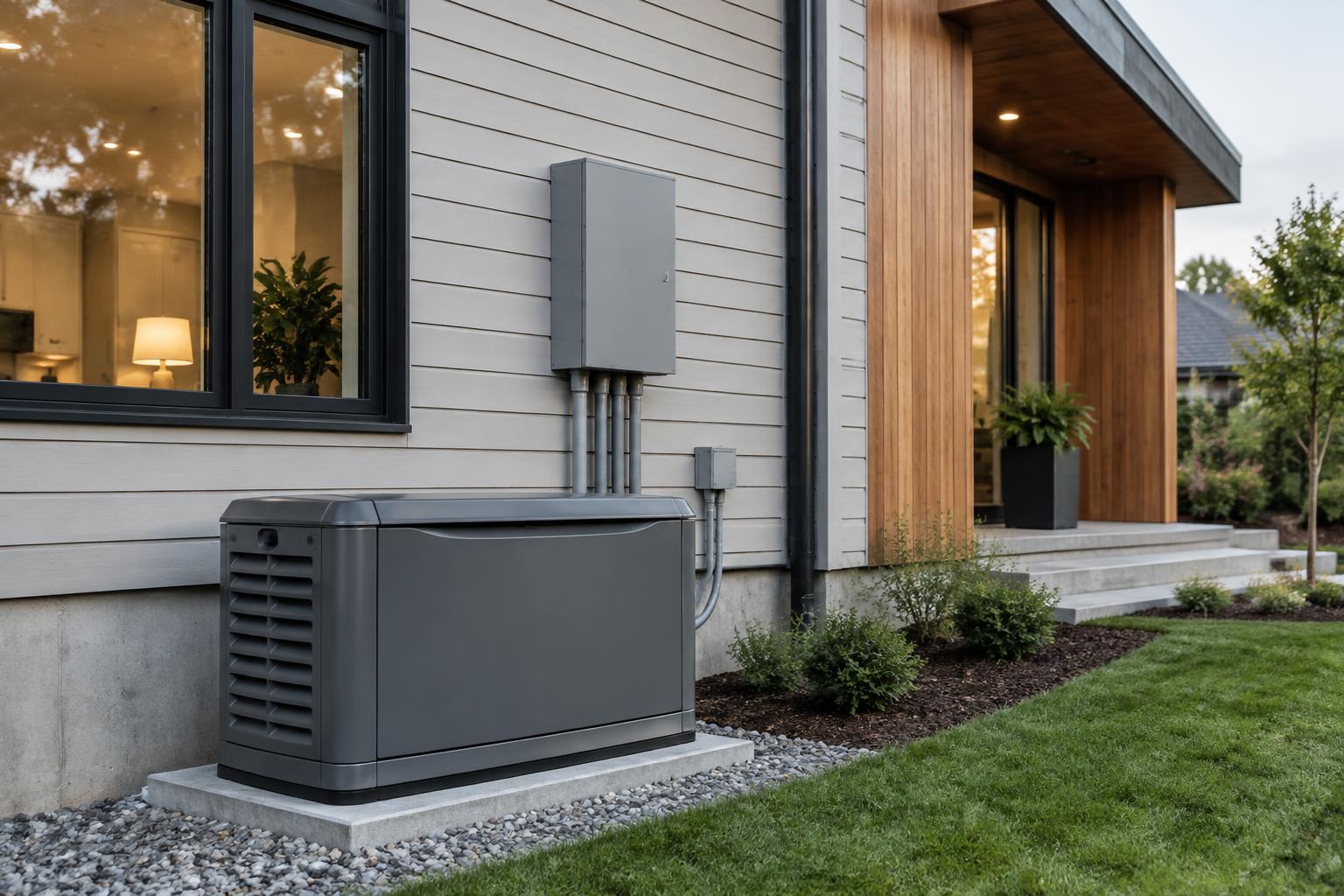
Placement follows manufacturer clearances from windows, doors, vents, and the property line, plus the practical questions of noise and how far the gas and conductors have to run. We site it with the gas contractor before anything gets poured.
Panel capacity and coordination
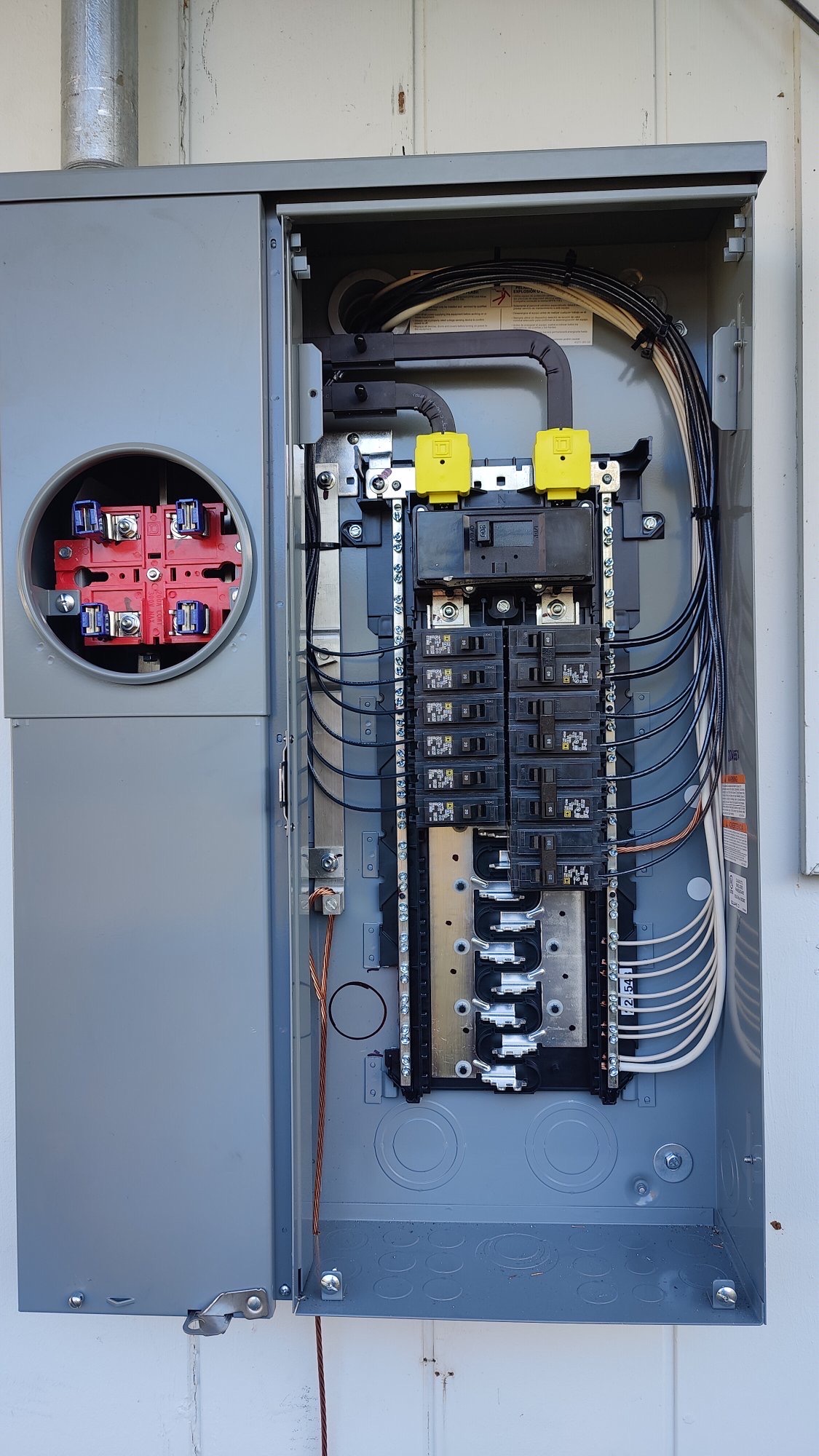
The generator connects at the service. If the panel is already full or undersized, the panel work comes first. We look at both together so the sequence is right and nothing gets done twice.
Commissioning and exercise
We load-test on commissioning, set the weekly exercise cycle, and walk you through what the unit does during an outage — including what it will not do, which is usually the air conditioning on a smaller unit.
What we plan for
- Whole-house versus critical-load decision made up front
- Automatic or manual transfer switch chosen for the situation
- Siting to manufacturer clearances, coordinated with gas
- Panel capacity confirmed or upgraded first
- Load test and exercise schedule at commissioning
- Clear walkthrough of outage behavior
Smart home electrical integration
Generator monitoring and backup-power visibility put run status, fuel, and exercise history on your phone — and pair naturally with energy monitoring at the panel so you can see what the unit is actually carrying.
Plan your smart home